

Print
Observe living plant cells under a microscope and watch chloroplasts moving inside them. This fascinating experiment reveals that cells are active, dynamic structures rather than static boxes.
Materials
- Fresh Elodea canadensis leaf
- Microscope (compound)
- Glass slide and coverslip
- Dropper or pipette
- Water
Instructions
- Place one small drop of water in the center of a clean glass slide. This keeps the Elodea leaf hydrated and transparent.
- Pinch or cut off a small, single leaf from near the tip of the Elodea stem. Choose a thin, light-green leaf, thicker ones make it harder to see individual cells.

- Lay a small piece of the Elodea canadensis leaf flat in the drop of water on the slide. Make sure it lies smooth and flat without folds.
- Hold the coverslip at a 45° angle and lower it slowly over the leaf to avoid trapping air bubbles.
- Start at low power to find the cells. They’ll appear as neat, brick-like shapes. Switch to high power to see internal details.
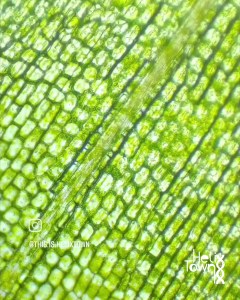
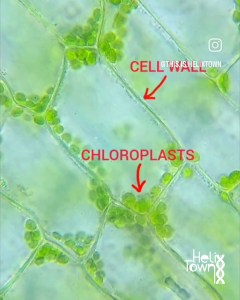
- Look closely at the green chloroplasts along the cell edges. Over time, you’ll notice them moving in slow, circular streams inside the cell. This is called cytoplasmic streaming.

- Draw or photograph your view. Label cell wall, chloroplasts, cytoplasm.
What’s going on?
- The green discs are chloroplasts, which carry out photosynthesis.
- Their movement (cytoplasmic streaming) helps the cell circulate materials like water and nutrients.
- The cell wall gives each cell its rigid shape.
Optional extensions:
- Compare a leaf under bright light vs dim light. streaming speeds up in warmth and bright conditions.
Level
- Intermediate
Tried this experiment?Please consider Leaving a Review!