
Print
Watch yeast transform sugar into carbon dioxide gas through the process of fermentation. Observe the gas produced by living yeast cells and discover how microorganisms help make foods such as bread and yogurt.
Materials
- A packet of active dry yeast (2¼ teaspoon)
- 1 teaspoon sugar
- ¼ cup of warm water (100–110°F)
- Small cup or test tube
- Microscope
- Dropper
- Glass slide and coverslip
Instructions
- In a small bowl or test tube, mix yeast, sugar, and warm water.
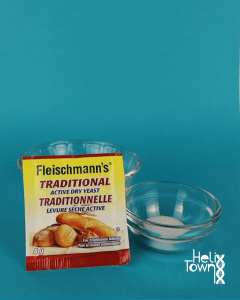
- Stir gently and let it sit for 5–10 minutes.You’ll soon notice foam forming, that’s carbon dioxide (CO₂) being produced as yeast breaks down the sugar.
- Use a dropper to collect a small drop of the bubbling yeast mixture.
- Place one drop of the yeast mixture on a clean glass slide. Add one drop of water to dilute it.

- Add the coverslip by lowering the coverslip gently at an angle (45°).
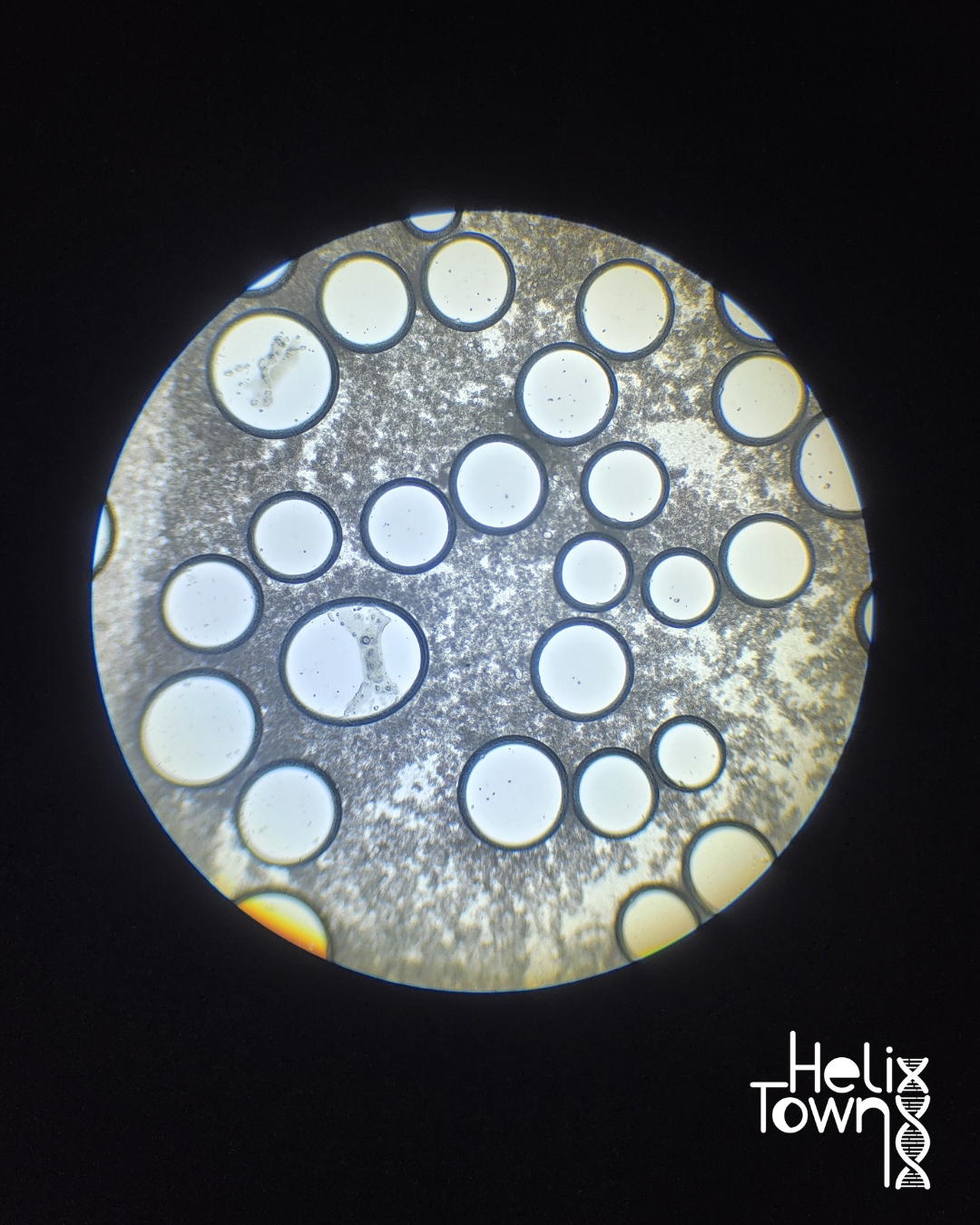
- Observe under the microscope to find the yeast cells and bubbles.

What’s going on?
- Yeast are living microorganisms that feed on sugar.
- During fermentation, they convert sugar into carbon dioxide (CO₂) and alcohol.
- The bubbles you see are CO₂ gas forming and escaping from the liquid.
- Under the microscope, yeast cells look like tiny round balls, often clumped together. The moving or growing bubbles show active fermentation in progress.
Level
- Intermediate
Tried this experiment?Please consider Leaving a Review!